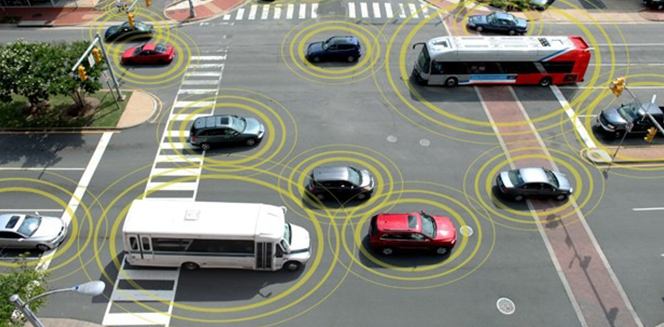
The epoch of the smart
transportation market has been remarkable so far. It gets more engaging as its
vendors venture to experiment with deep learning.
The smart
transportation market experience
Remember those long ticketing queues, and those hours of
wait before you could get to know the availability status alone? A couple of
decades ago, automatic fare collection and ticket vending machines was the
future plan. That future, is now. We live in a generation, where embedded
devices in machines enable automatic fare collection and simultaneous data
entry. Travel authorities can keep a constant check on mode and route of travel
at multiple nodes. In addition, the authorities ensure that passengers are kept
informed through appropriate guidance through the course of travel. With enough
knowledge of moving traffic over route , a general estimation is drawn for the
design of parking. A driver can confidently drive-in at a facility be rest
assured of ample parking space, whereas, the facility owner has a detailed
profile of who and what is passing through. An integrated supervision system
and traffic management system adds convenience in today’s fast-moving lives. Collectively,
the standalone installations feed inputs to multiple back-end computers in a
distributed or central network. Once, big data analytics and deep learning arrives
in the picture, the smart transportation industry exhibits immense future scope
for getting even smarter.
Read market research reports on Smart Transportation Market at: https://www.alliedmarketresearch.com/smart-transportation-market
![]() |
| pixabay.com |
Smart transportation
market: Need of the hour
An extraordinary degree of technological advancements has
been incorporated in the transport segment over previous decade . Global smart
transportation market has evolved significantly; from basic traffic and vehicular
support to more complex integrated supervision systems. Advanced applications,
rule the mindset of current population . An intelligent transport system (ITS) is
what wins the trust of any consumer looking forward to logistic solutions. It
is quite obvious, if one thinks of all extended support that accompanies an
integrated traveling environment. It becomes a lot easier to know what is being
transferred, in what amount, where all it has left its footprints, and the
events that occur midway. Although, a vast amount of back support is required
for developing these systems. The solution vendors range from small local
players and mid-sized enterprises to huge corporate giants, which manage their
services right across the face of the globe.
Right after the European Union (EU) declared its directives
binding the European operations within a legal framework, entire global smart
transportation market took the hint. It adapted accordingly, supporting the
idea of a more efficient network that functions within a cleaner and safer
environment. Objective of the EU directive match the requirements which led to
the emergence of smart transportation market . A correct structure enhances the
driving and traveling experience despite the booming increase in on-road
vehicles. Regional administration offices are equipped with real-time data
which helps them reduce the risks of traffic blocks. Automatic rerouting
instructions are carried out, as soon as any sort of congestion is detected.
Adherence to safety measures is easily monitored, effectively penalized or
rewarded, and hence, consequently lower the numbers of accidents. The use of
green fuels, as an alternative to the conventional, is encouraged under an
intelligent transport system. Several concessions and privileges are provided
to stimulate its adoption rates among the non-users.